
Currently Empty: £0.00


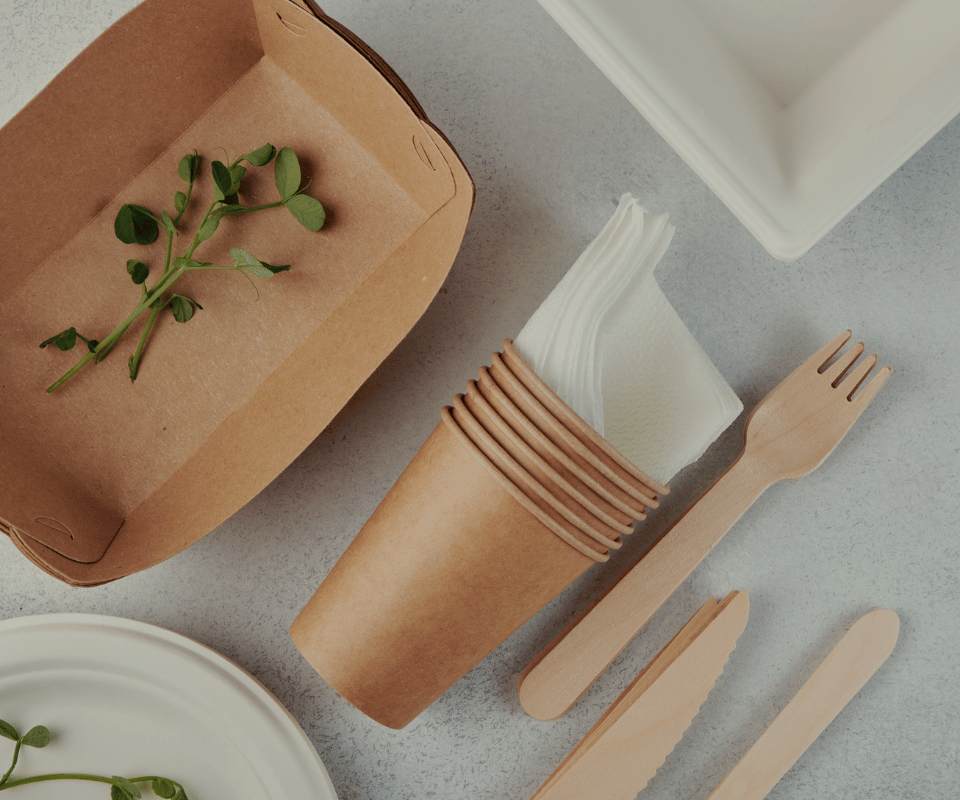
5 Essential Features of the Best Food Packaging for Takeaway and Delivery Businesses
Food delivery customers expect more than a good meal. They want their food to arrive fresh, intact, at the right temperature, and presented in a way that reflects the quality of the restaurant. For restaurants, cafés, food trucks, caterers, and delivery kitchens, the right packaging can help meet these expectations while reducing spills, food waste, and avoidable customer complaints.
Choosing the best food packaging for takeaway and delivery businesses involves more than comparing container prices. Restaurants need packaging that protects food during transport, maintains its quality, supports brand recognition, and suits their menu and sustainability goals.
From durable takeaway containers and insulated delivery bags to custom food packaging and tamper-evident seals, every component plays a role in the delivery experience.
In this guide, we explore five essential food packaging features, explain what to look for when comparing products, and share practical checks businesses can use before placing a bulk order.
1. Durability and Protection Against Leaks and Spills
Food packaging must withstand the demands of preparation, stacking, handling, and transportation. A container that performs well at the counter may still leak or lose its shape during a longer delivery journey.
Durability is particularly important for restaurants selling soups, curries, pasta, rice dishes, salads with dressings, and other meals that can spill or become damaged in transit.
Which food packaging materials work best?
Different materials offer different benefits. The most suitable choice depends on the food, serving temperature, journey length, and packaging requirements.
Packaging material | Common applications | What to check |
Plastic containers | Sauces, salads, cold sides and selected hot foods | Food-contact suitability, temperature limits and lid fit |
Paperboard containers | Sandwiches, bakery items, dry meals and selected takeaway dishes | Grease resistance, moisture tolerance and structural strength |
Selected hot meals, sides and takeaway portions | Liquid resistance, lid compatibility and intended use | |
Oven-suitable meals and hot food applications | Compatibility with the intended heating method and lid | |
Bowls, snacks, salads and selected takeaway meals | Lining, leak resistance and suitability for the food being served |
These are general starting points rather than guarantees of performance. Two containers made from the same material can behave differently because of their design, coating, thickness, and closure system.
Before purchasing, confirm that the product is designed for your intended food-contact conditions. The US Food and Drug Administration (FDA) explains how food-contact substances are regulated and why their intended use matters. Read the FDA’s food packaging guidance.
Why secure lids and tamper-evident seals matter
A reliable lid helps prevent spills and protects food during handling. Look for a secure fit that stays in place when containers are stacked, carried, or moved inside a delivery bag.
For liquid-heavy meals, check the lid and container together rather than assessing either component separately. A compatible lid can still perform poorly if the container rim is distorted or the closure is not fully secured.
Tamper-evident seals provide an additional indication that a package has been opened or interfered with after sealing. Depending on the packaging format, options may include adhesive security labels, sealing strips, or purpose-designed closures.
These seals should be easy for staff to apply consistently and straightforward for customers to recognise. They do not replace good food handling, appropriate temperature control, or secure packaging.
A practical packaging test before ordering in bulk
Before committing to a large quantity, test representative products using the foods you actually sell.
- Fill: Use a typical serving size and the appropriate food temperature.
- Close: Fit the lid according to the manufacturer’s instructions.
- Tilt: Check for leaks using a controlled test suitable for the product and food.
- Stack: Place filled containers in the arrangement used for delivery orders.
- Transport: Simulate normal handling and a representative delivery journey.
- Inspect: Check for leakage, lid movement, soggy surfaces, crushed corners, and changes in food presentation.
Record the results and repeat the test with more than one sample. A simple, repeatable process makes it easier to compare suppliers on performance rather than price alone.
2. Insulation and Temperature Control During Delivery
Temperature management is a key consideration when food travels from the kitchen to the customer. Hot meals should remain appropriately hot, while chilled products need protection from unwanted warming.
However, packaging alone cannot guarantee safe temperatures. Food preparation, storage, dispatch time, delivery distance, and handling practices all influence the final result.
The role of insulated delivery bags
Insulated delivery bags help reduce heat transfer between packed orders and the surrounding environment. They can also help protect containers from external handling and keep multiple items organised.
When comparing insulated delivery bags, consider:
- Insulation performance: Check the manufacturer’s specifications and suitability for your delivery requirements.
- Capacity: Make sure the bag accommodates your usual order sizes without forcing containers together.
- Closure: A well-fitting zip or flap helps reduce unnecessary exposure to outside conditions.
- Cleaning: Choose an interior that can be cleaned according to the manufacturer’s instructions.
- Construction: Reinforced seams, practical handles, and a stable base can make repeated use easier.
- Order separation: Dividers or separate compartments can help prevent cold drinks from being packed alongside hot meals.
The best choice depends on the business model. A café delivering sandwiches and drinks may need a different bag configuration from a restaurant handling several hot entrées and soup containers.
Match packaging to the food
A delivery order may contain foods with different temperature and moisture requirements. Packaging should accommodate these differences rather than treating the entire order as one unit.
Food type | Packaging consideration | Practical tip |
Hot meals | Heat retention and secure closure | Use containers designed for the intended serving temperature |
Soups and curries | Leak resistance | Check lid compatibility and container stability |
Fried foods | Moisture management | Avoid trapping excessive steam when the product design allows ventilation |
Salads and chilled foods | Moisture control and suitable cold storage | Keep chilled items separate from hot food |
Cold drinks | Spill prevention | Use suitable lids and separate drinks from food containers |
Fried foods can become soft when steam accumulates inside a tightly closed container. A packaging design that balances ventilation and protection may help preserve texture, but the right choice depends on the food and journey.
Follow appropriate food safety practices
Restaurants should establish procedures for preparing, holding, packing, and dispatching food. Packaging and insulated bags support these procedures, but they are not substitutes for them.
The FDA Food Code provides model guidance for retail food safety, including temperature-control practices. Its provisions are adopted and implemented by relevant jurisdictions, so businesses should check the requirements that apply to their location. Consult the FDA Food Code.
For delivery operations, record how long orders wait before dispatch, establish appropriate holding procedures, and investigate recurring temperature complaints. Where necessary, use suitable temperature-monitoring methods rather than relying on the feel of a container or bag.
3. Custom Food Packaging and Design That Strengthen Your Brand
Food packaging is often one of the first physical touchpoints a delivery customer has with a restaurant. A clear logo, consistent colors, and well-presented food can reinforce brand recognition beyond the dining room.
Custom food packaging can help restaurants create a consistent identity across takeaway orders, catering deliveries, and collection services. The most effective design, however, combines visual appeal with practical usability.
Essential elements of effective food packaging design
- A recognisable brand identity
Use your logo, brand colors, and typography consistently across containers, bags, stickers, and labels. A simple design is often easier to recognise than packaging crowded with competing messages.
- Clear, useful information
Depending on the product and applicable requirements, packaging or labels may communicate the dish name, order identification, storage instructions, reheating guidance, or allergen information. Ensure that information is accurate, legible, and appropriate for the food being sold.
- A design suited to the packaging material
Printing options vary by substrate, coating, and supplier. Before approving custom food packaging, request a sample or proof to check color consistency, logo placement, legibility, and how the design appears on the finished item.
- Practical packaging dimensions
A visually attractive container is not useful if it cannot hold the portion securely. Choose a size and shape that fit the food, allow sensible stacking, and work with your delivery bags.
- Consistency across the customer experience
Where appropriate, coordinate takeaway containers with carrier bags, seals, napkins, and other branded elements. Consistency can make an order feel more considered without requiring elaborate packaging.
Is custom packaging worth the investment?
Custom packaging can be valuable for established restaurants, growing takeaway brands, and businesses with repeat customers. However, it is not automatically the most cost-effective option for every operation.
Compare the total cost, including printing, minimum order quantities, storage, lead times, and the risk of unused stock when branding changes.
For a smaller business, plain containers combined with branded stickers or labels may provide a practical way to introduce brand identity before committing to large custom-print runs.
When comparing suppliers, request samples, confirm artwork requirements, and check whether the proposed printing method is suitable for the intended food-contact application. Food-contact components and printing arrangements should be assessed for their intended use, not simply their appearance.
4. Eco-Friendly Options: Biodegradable Food Packaging and Reusable Food Containers
Sustainability is an increasingly important consideration in food packaging decisions. Businesses may want to reduce unnecessary material use, select recycled or renewable materials where appropriate, or introduce reusable food containers.
The challenge is to choose options that work for the food, the business, and the local waste-management system.
Understanding biodegradable and compostable food packaging
The terms used to describe sustainable packaging are not interchangeable.
- Biodegradable packaging: Describes material intended to break down through biological processes under relevant conditions. The time and extent of breakdown depend on the material and environment.
- Compostable packaging: Is designed to break down under specified composting conditions and meet applicable criteria.
- Recyclable packaging: Can be processed through a suitable recycling system, but actual acceptance depends on local facilities and material composition.
- Reusable food containers: Are intended for repeated use when properly cleaned, maintained, and managed.
A package described as biodegradable may not break down quickly in a landfill or in the environment where a customer disposes of it. Likewise, compostable packaging may require a commercial composting facility rather than a home compost bin.
The Federal Trade Commission’s Green Guides explain that environmental marketing claims should be specific and supported by evidence. Unqualified claims such as “eco-friendly” can be misleading if they imply broader environmental benefits than the business can substantiate. Read the FTC’s environmental claims guidance.
How to compare sustainable packaging options
Option | Potential benefit | Important consideration |
Can suit dry foods and selected takeaway applications | Grease barriers, coatings and local recycling acceptance | |
Can be suitable for selected food-service uses | Liquid resistance and access to suitable disposal facilities | |
Recyclable plastic packaging | May fit established collection and recycling systems | Resin type, food residue and local recycling rules |
Reusable food containers | Can reduce reliance on single-use items when reused sufficiently | Return rates, cleaning, transport and replacement |
Compostable packaging | May suit businesses with access to appropriate composting services | Certification, disposal instructions and local facility acceptance |
No single material is the best choice for every restaurant. A package that performs poorly and causes food waste may undermine some of the benefits of changing materials. Businesses should consider performance, material use, transport, disposal access, and the actual behaviour of customers.
Are reusable food containers right for your business?
Reusable food containers may be worth evaluating for workplace catering, meal subscriptions, institutional food service, and local delivery schemes where returns can be managed.
Before introducing a reusable system, answer these questions:
- How will customers return containers?
- Who will collect, inspect, and clean them?
- How will the business track returns and replacements?
- Are the containers designed for repeated use under the intended conditions?
- Can the business manage cleaning, storage, and transport efficiently?
A reusable scheme needs a reliable return and cleaning process. Without one, the intended benefits may not materialise.
Make sustainability claims customers can trust
Be specific about the feature you can verify. For example, if a product is certified for commercial composting, state that clearly and explain the disposal conditions. Do not imply that it can be composted at home unless that claim is supported.
Likewise, do not describe packaging as recyclable without checking the relevant material and local collection requirements. Accurate product information helps customers make informed disposal decisions and protects the credibility of your brand.
5. Flexible Packaging for Different Menus and Changing Food Packaging Trends
Restaurants rarely serve only one type of food. A single delivery operation may need packaging for burgers, salads, pasta, desserts, sauces, drinks, and family-size orders.
Choosing the right packaging range means balancing versatility with food-specific performance. One oversized container may appear convenient, but it can allow food to move around, increase material use, and create presentation problems.
Match packaging to your menu
Menu item | Suitable packaging approach | What matters most |
Burgers and sandwiches | Appropriately sized clamshells, wraps, or paperboard packs | Structural support and moisture management |
Fries and other fried foods | Food trays or containers suited to the product | Ventilation and protection from crushing |
Salads and cold bowls | Suitable bowls with compatible lids | Secure closure and separation of dressings where needed |
Pasta, rice and hot entrées | Containers designed for the food’s temperature and moisture | Portion fit, strength and lid security |
Soups and curries | Purpose-designed leak-resistant containers | Closure performance and stable transport |
Cakes and desserts | Bakery boxes or protective containers | Shape retention and protection from movement |
Family or catering orders | Larger formats, trays, or coordinated container sets | Secure stacking and efficient order organisation |
Use the table as a starting point, then test the actual products with your menu. Recipes, portion sizes, sauces, and delivery times can all affect packaging performance.
Food packaging trends worth evaluating
Several developments may influence packaging decisions as businesses respond to customer expectations and operational needs.
Simpler, functional design: Packaging that is easy to open, carry, stack, and dispose of can improve usability while avoiding unnecessary complexity.
More considered material choices: Businesses are assessing paper-based, molded-fiber, recyclable, and reusable formats according to product performance and available disposal systems.
Custom branding: Printed packaging, labels, and tamper-evident seals can create a more consistent takeaway experience.
Packaging designed around delivery: Containers that fit delivery bags, resist movement, and separate wet and dry foods can help address common operational problems.
Better portion and format selection: Offering several container sizes can reduce the need to use oversized packaging for smaller meals.
These are practical areas to evaluate, not guarantees of consumer demand or business growth. Before adopting a new format, test its cost, availability, storage needs, and suitability for your customers.
Build a packaging range around your operation
A restaurant does not necessarily need dozens of packaging products. A carefully selected core range can cover most orders while keeping purchasing and stock management manageable.
Start by grouping menu items according to their packaging requirements. Identify the containers, lids, bags, seals, and accessories that work across multiple dishes without compromising food quality.
Then assess each option against five factors:
- Performance: Does it protect the food during normal delivery conditions?
- Compatibility: Do lids, seals, bags, and accessories fit together correctly?
- Cost: What is the total cost per order, including accessories and waste?
- Storage: Can the business store the packaging without creating operational problems?
- Supply reliability: Can the supplier meet expected demand and provide consistent specifications?
This approach can help businesses make purchasing decisions based on the full operating cost rather than the price of an individual container.
How to Choose the Best Food Packaging for Your Business
Before placing an order, use this checklist to compare packaging options.
- The packaging suits the food’s temperature, moisture, and portion size.
- Containers and lids are compatible and secure.
- The material is appropriate for the intended food-contact use.
- The packaging has been tested under realistic handling and delivery conditions.
- Insulated bags and order separation meet the needs of the delivery operation.
- Branding, labels, and tamper-evident seals are practical to apply.
- Sustainability claims are supported by product information or appropriate certification.
- Disposal instructions reflect the facilities available to customers.
- The total cost, minimum order quantity, storage needs, and lead time are acceptable.
- The supplier can provide clear product specifications and consistent replenishment.
If a product fails a critical test, compare an alternative before committing to a bulk purchase. A short evaluation can help identify problems before they affect a larger number of customer orders.
Frequently Asked Questions
What is the best food packaging for takeaway and delivery businesses?
The best option depends on the menu, portion size, temperature, delivery distance, and budget. Restaurants should prioritise secure closures, suitable food-contact materials, resistance to leaks and crushing, and packaging that preserves the intended food quality during transport.
Which packaging is best for hot takeaway food?
The right choice depends on the dish. Hot entrées may need sturdy containers with secure lids, while fried foods often benefit from packaging that manages steam. Always check the manufacturer’s temperature and use specifications, and test the package with the actual food.
Why are tamper-evident seals important for food delivery?
Tamper-evident seals help show whether a package may have been opened after sealing. They can support customer confidence and order-handling procedures, but they do not replace appropriate food safety practices.
Is biodegradable food packaging always environmentally friendly?
Not necessarily. The environmental outcome depends on the material, how it is manufactured and used, and how it is disposed of. Some products need specific industrial composting conditions, and local facilities may not accept every packaging type.
Are reusable food containers suitable for takeaway restaurants?
They can be suitable when a business has a workable return, inspection, cleaning, and redistribution system. Restaurants should evaluate the logistics and costs of repeated use before introducing a reusable-container programme.
How can custom food packaging improve a restaurant's brand?
Custom packaging can make the customer experience more consistent through recognisable logos, colors, and useful information. Its value depends on the quality of the design, the order volume, the cost of customisation, and whether the packaging performs well in everyday use.
What should businesses check before ordering food packaging in bulk?
Request product specifications and samples, verify lid compatibility, test packaging with representative menu items, confirm food-contact suitability, and compare the total cost and storage requirements. For customised products, review a proof before approving the full order.
Conclusion
The best food packaging for takeaway and delivery businesses combines protection, temperature management, practical design, brand consistency, and responsible material selection. No single container or material will meet every need, so the strongest packaging strategy begins with the food and the way each order is prepared, packed, and transported.
Test products under realistic conditions, choose compatible containers and accessories, and compare the full cost of each option. Where sustainability matters, check the evidence behind product claims and make sure customers have clear disposal guidance.
For restaurants, cafés, caterers, and delivery kitchens, a well-planned packaging range can support a more reliable takeaway experience while helping staff manage orders efficiently. Taltex UK Ltd can use these selection criteria to guide customers towards packaging options that match their menu and operational requirements, provided the relevant products and supply services are available.